
We spend a lot of time these days talking about tools. Tools that make our lives easier. Tools that help us visualize information. Tools that can be used to break down problems or compile solutions. But sometimes we need to take a step back from the tool and look more closely at the intent. After all, the tool was only a solution to help overcome someone’s problem back in the day. Tools are merely tactical.
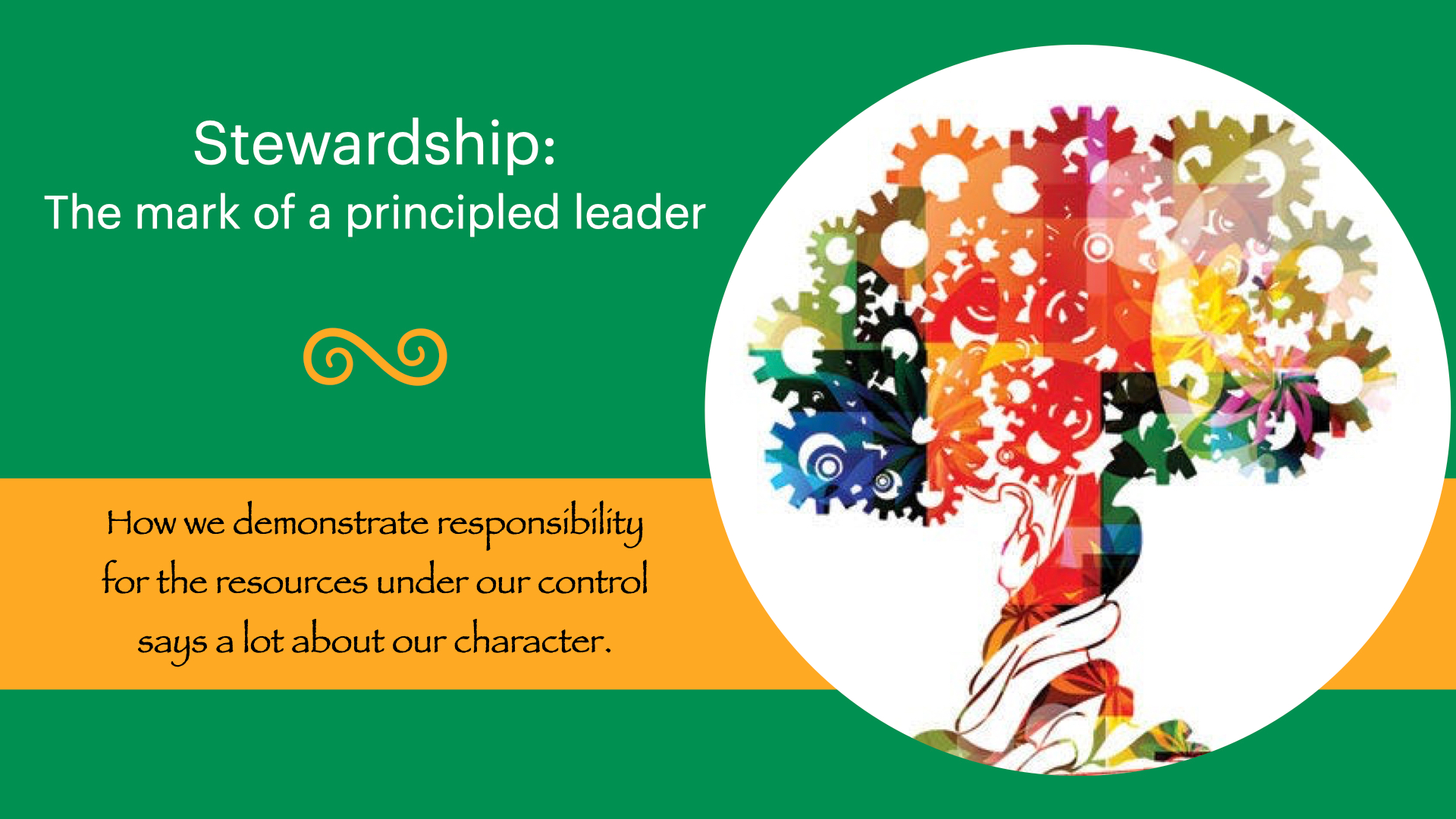
So what are we actually trying to accomplish with these tools? As we back up and survey the landscape, we are likely to find that we are looking for a more effective and responsible approach. A means to do more with less, to hold ourselves accountable for outcomes, and to increase our productive capabilities. This is the essence of stewardship. Good stewardship is managing the resources of others well; with purpose, with focus, and with competence.
The term stewardship is rarely used these days but perfectly encapsulates the characteristics we are trying to embody. As leaders and managers, we are given authority and responsibility to oversee particular aspects of the organization for the ultimate good of that same organization. Stewardship applies to the inanimate world in much the same way as Servant Leadership applies to the people under our charge. Can you be successful with only moderate stewardship? Certainly. Will increased stewardship in turn enhance our success? Most assuredly.
Another often neglected aspect of stewardship relates to reputation. Stewards are always in a proxy position to represent an organization, both to the outside world and to the internal team members. Therefore, stewards are essentially ambassadors and have incredible influence on reputations. For this reason, we need to take the idea of stewardship seriously when developing and celebrating our employees.
Oddly, stewardship is a skill that is rooted in character. As a skill, it can be learned by virtually anyone, however, great stewardship will necessarily require the incorporation of timeless principles that are increasingly uncommon in today’s society, such as;
Diminished self – Great stewards are willing to put the needs of organization and of their contemporaries above their own. This selfless attitude should not be confused with weakness. They recognize that the long-term health of the organization, the community, or the world at large is in their own best interest and refuse to get ahead personally at the expense of the greater good.
Transparent accountability – Great stewards don’t mind being held to a high standard and understand that the standard naturally should move higher over time if we desire to stay competitive. Taiichi Ohno is credited for saying “Where there is no standard, there can be no improvement,” and he was right. Our competition is choosing to improve. We must do the same or be left behind. Good stewards exemplify this principle by accepting the standard openly and being eager to exceed it.
Flexibility – Finally, great stewards are able to enact changes rapidly. Plans are always going to change when reality pushes back. Agility that enables someone to pivot and course-correct in real time is a hallmark attribute of a great steward. If the goals are well known, a good steward can be trusted to shift resources, tactics, and manpower appropriately to compensate. If the plan needs to be adjusted to the changing conditions, so be it. Stewards are reliable to instinctively keep the ship righted in the midst of any storm.
Stewardship is a skill that we can all benefit from strengthening. The principled nature of stewardship is rarely easy and requires character that not everyone possesses. Whatever your role in an organization, good stewardship of resources and reputation will serve you well. Have you considered the role of stewardship in your organization? How have you emphasized the skill of stewardship in your development efforts? How have you modeled good stewardship to those around you?
Lean in, and Lean on.