
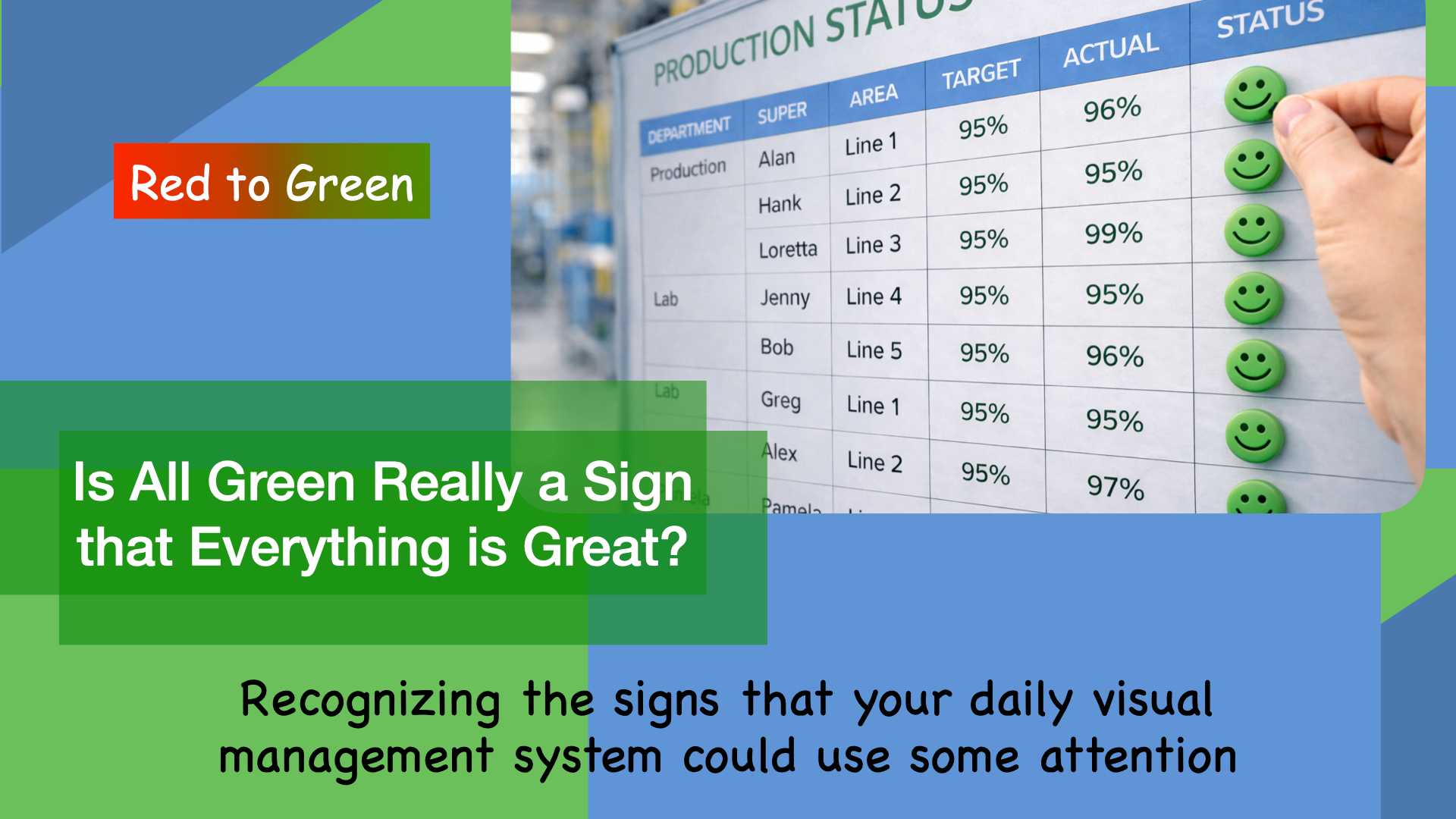
Green means good and red means problems, right? Therefore, people commonly interpret an array of green indicators to mean that “My ability is confirmed by the sea of green. I’ve succeeded in spinning all the plates.” This mentality, however, misses the whole point of continuous improvement. The indicators are there to measure the health of the system, not the competence of the people managing it.
So what then are we to do with systems that are all green, all the time? This is a serious and disturbing problem if you examine it closely. Taiichi Ohno famously quipped “No problem is a problem” to address this very predicament. The illusion of excellence has effectively blinded us to the weaknesses lurking in our systems if we accept that everything is stable, healthy, and perfected when it is certainly not.
There are several, serious underlying issues that need to be explored in order to remedy this all too common misconception.
- People are hiding problems out of fear. Traditionally, organizations blame people rather than processes for unexpected failures and disruptions. This has disastrous long-term effects on morale and leads to blame, infighting, and colleague sabotage if left unchecked. Whether the fear is linked to reprisal or just embarrassment, it can cause teams to hide issues that they know may eventually wreak havoc on them in future, gambling that that day will never come. To break this mentality, employee experiences need to become consistently positive whenever problems are exposed.
- Egos are interfering with improvement. It’s not uncommon for companies to have exceptional firefighters, information hoarders, or sacred cow managers that assert that they are exempt from participating in continuous improvement for one reason or another. They believe that they have earned a pass and can post green to prevent any unwanted prying eyes from examining their domains. Beware: exemptions breed contempt from everyone else involved and have the potential to tear the endeavor apart.
- Employees legitimately cannot see threats in their areas. This ignorance is usually due to a lack of intentional training mixed with poorly chosen metrics. When people understand how their work matters and how it drives success, they are naturally inclined to participate. It is incumbent on us to equip our teams with the ability to recognize the various threats and not take on that responsibility ourselves. Our selection of appropriate metrics plays a significant role here, too. Metrics should be simple to understand, easy to tie back to our work, meaningful to the entire team, and – most importantly – something team members can actually impact.
- The metrics are too achievable. All metrics have both a category (FPY, TRIR, Turns, etc.) and a target level (e.g. 95%). The most common problem I tend to see is that the selection of target performance levels are too easily attained, which undermines both discipline and productivity. This means that the standards ought to be to raised to continue to challenge us toward greater achievement. Standards and targets should always be evolving. They are deliberately not static. Once we achieve a superior level of performance, it is time to raise the bar and challenge ourselves to even higher performance. This is the heart of Lean and is often missed.
- There is no real accountability. This is a hard one for many to swallow. Sometimes “all green” stems from performative measurements, careless reporting, or downright deception because no one seems to care or take continuous improvement seriously. Red is intended to expose threats, problems, and weaknesses that will cause a vast, interdependent system to stumble. Red should provoke immediate and thoughtful reaction. Many people experience half-hearted deployments that demand paperwork without any action, causing them to conclude that Lean is a tedious reporting tool rather than a problem-solving methodology with a built-in early warning system. If red brings blame instead of corrective action, expect reporting to be highly compromised. The phrase “Inspect what you expect” rings very true.
Lean in and Lean on.