
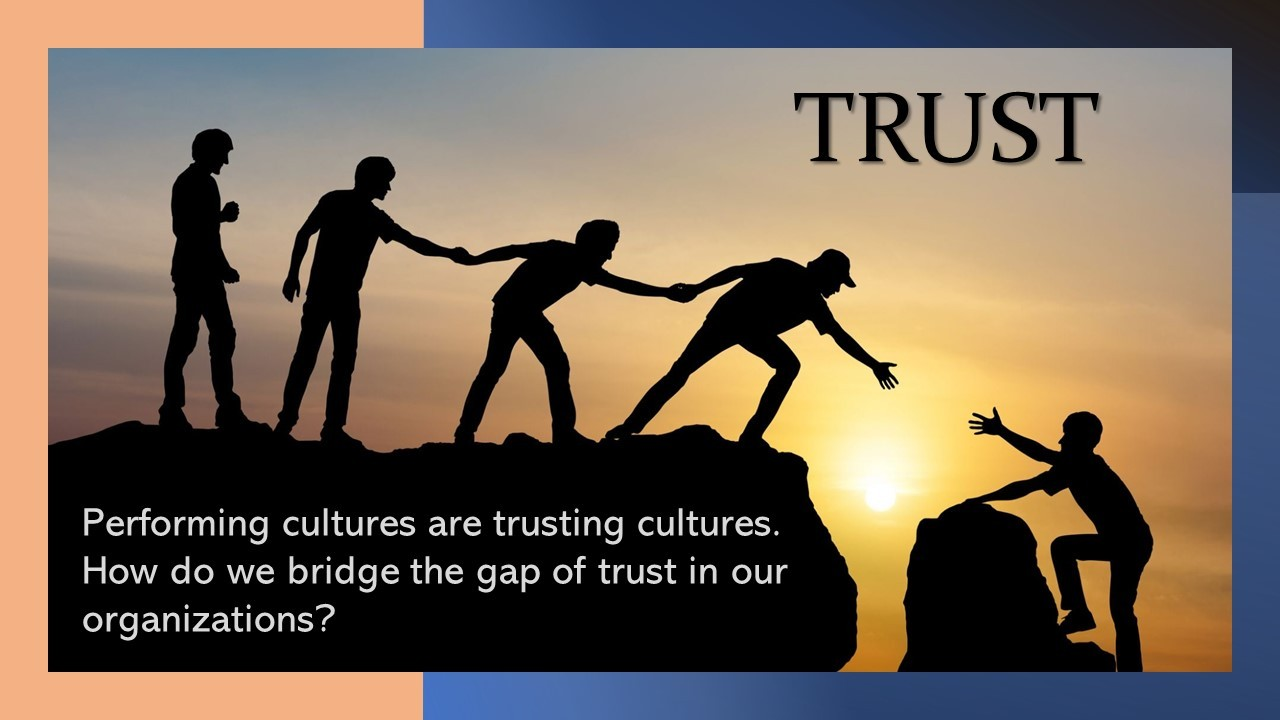
Many books and articles address the need to nurture a culture of trust in an organization if improved performance is the aim, but that trust is often only oriented vertically. True, this is the best place to start. Management must demonstrate trust in their workforce that they will do the right thing before the organization reciprocates with trust in the leadership. This is embodied in a foundational tenet of the Lean approach: respect for the individual. Once achieved, the workforce develops kinship with the leadership and will enthusiastically participate in the pursuit of the shared vision.
However, there is another crucial element to organizational trust that must not be missed; lateral trust across organizational departments or functions. Consider the analogy of a traditional family where respect for the parents is established, but sibling rivalries and infighting undermine the effectiveness of the family as a cohesive team. Companies experience this phenomenon every day in a variety of ways.
Understanding seeds trust
The natural silos that help define functional boundaries also serve to interfere with lateral understanding. These silos are effective in a command-control styled culture, but they are caustic in high-performing Lean cultures. Silos are tribal and hold tribal secrets, which promote exclusivity and drive groups apart. Dismantling these departmental silos is an important stage of any Lean journey. It helps to foster greater awareness across the organization, dispel any lingering shadows of mystery on their processes, and serves to properly align expectations from function to function in the value chain. Workshopping the value streams (cross-functionally, of course) to provide transparency is a good mechanism to shed healthy light in these otherwise closed off silos.
Collaboration feeds trust
Once better understand has begun and natural defenses have been diminished, cross-functional collaboration becomes an essential next step. Maintaining active cross-functional activity helps to prevent the traditional barriers from re-establishing themselves. Additionally, it promotes lateral engagement for synergistic performance benefits. As teams and functions collaborate successfully, trust grows; for trust gradually follows from experiences that demonstrate trustworthiness. Therefore, facilitate and promote these trust-building experience opportunities.
Acknowledged achievement propels trust
Often the least expensive rewards are the most effective. Generous but sincere recognition of the efforts and outcomes of collaborating teams would be a prime example. By celebrating the achievements of our open and cross-functional teams we reinforce the expectation of mutual respect, transparency, and cooperation. Incentivize and reward the behavior you desire to cultivate the culture of trust. Regularly reinforce the notion that success doesn’t go unnoticed here. Success is a product of interdependent cross-functional teams, thereby associating teamwork with achievement in a virtuous cycle. Teamwork provides opportunities to achieve success and successively build upon trust.
In order to promote a healthy improvement culture in your enterprise, a solid foundation of trust needs to be in place. Trust must be built vertically, between the leadership core and the workforce, as well as laterally, across functions. Is lack of trust interfering with your success? What steps are you prepared to take to begin establishing opportunities for trust to take root? Are there silos that stand like monuments to days gone by that need to be dismantled? Promoting wide understanding, collaboration, and recognition will stimulate intercompany trust that will eventually become the underpinning of your improvement culture.
Lean in and Lean on.